Penrite 80W-90 Gear Oil 20L
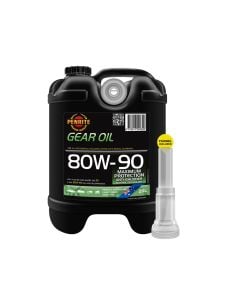
Penrite · Part number GO8090020 · NZ$362.00 incl. GST
If your 4WD's been sounding a bit whiny lately, especially when you're locked in low range, your diff oil might be giving up the ghost. Ignoring it means you'll be chewing through expensive gears, and trust me, a $30 bottle of Penrite is a far sight better than a several-thousand-dollar rebuild.
Price
NZ$362.00 including GST. Part number GO8090020.
Fits these vehicles
- Alfa Romeo 145 (1994–1996)
- Alfa Romeo 145 (1994–1996)
- Alfa Romeo 145 (1996–2001)
- Alfa Romeo 145 (1997–2000)
- Alfa Romeo 146 (1994–1996)
- Alfa Romeo 146 (1994–1996)
- Alfa Romeo 146 (1996–2001)
- Alfa Romeo 146 (1997–2000)
- Alfa Romeo 1750-2000 (1968–1972)
- Alfa Romeo 1750-2000 (1971–1975)
- Alfa Romeo 33 (1983–1986)
- Alfa Romeo 33 (1983–1987)
- Alfa Romeo 33 (1983–1993)
- Alfa Romeo 33 (1984–1986)
- Alfa Romeo 33 (1984–1987)
- Alfa Romeo 33 (1984–1987)
- Alfa Romeo 33 (1984–1989)
- Alfa Romeo 33 (1986–1989)
- Alfa Romeo 33 (1986–1989)
- Alfa Romeo 33 (1986–1989)
- Alfa Romeo 33 (1986–1989)
- Alfa Romeo 33 (1986–1989)
- Alfa Romeo 33 (1986–1989)
- Alfa Romeo 33 (1986–1989)
- Alfa Romeo 33 (1986–1990)
- Alfa Romeo 33 (1988–1989)
- Alfa Romeo 33 (1988–1989)
- Alfa Romeo 33 (1990–1992)
- Alfa Romeo 33 (1990–1992)
- Alfa Romeo 33 (1990–1992)
- Alfa Romeo 33 (1990–1992)
- Alfa Romeo 33 (1990–1994)
- Alfa Romeo 33 (1990–1994)
- Alfa Romeo 33 (1990–1994)
- Alfa Romeo 33 (1990–1994)
- Alfa Romeo 33 (1990–1994)
- Alfa Romeo 33 (1990–1994)
- Alfa Romeo 33 (1990–1994)
- Alfa Romeo 33 (1992–1994)
- Alfa Romeo 33 (1992–1994)
Description
Is your 4WD making a racket? Don't get caught out, mate!
If your 4WD's been sounding a bit whiny lately, especially when you're locked in low range, your diff oil might be giving up the ghost. Ignoring it means you'll be chewing through expensive gears, and trust me, a $30 bottle of Penrite is a far sight better than a several-thousand-dollar rebuild.
Gear oil isn't something you think about until you hear it. Differentials, gearboxes, and transfer cases live hard lives, especially off-road or when towing. They rely on gear oil to lubricate and protect those expensive internal parts. When the oil breaks down, gets contaminated, or just runs low, those gears start grinding and that's when things get ugly.
Here's what to listen (and feel) for – your wallet will thank you:
• Whining or Howling: This is the classic symptom of worn gears starved of lubrication – a real gut feeling.
• Hard Shifting: Gears need properly lubricated synchros to mesh smoothly. Old oil means crunchy shifts, like changing gears in a rusty old tractor.
• Clunking: Excessive play in the drivetrain can be aggravated by poor lubrication – not the good kind of clunk.
• Heat: A hot diff or gearbox is a sign of friction, and friction means wear. If it's too hot to touch, you've got trouble.
• Leaks: Oil leaking out means oil isn't doing its job *inside* – a sure sign it's time for a top-up or change.
Penrite Gear Oil 80W-90: The Spec That Matters
This full synthetic gear oil is designed to handle the extreme pressures and temperatures found in differentials, gearboxes, transfer cases, and axles. It's suitable for both hypoid and limited-slip diffs, offering enhanced protection against wear and corrosion. Plus, it helps maintain viscosity, improve fuel efficiency, and ensure smooth gear changes – keeping your rig running like a dream.
DIY Change? Here's the Kiwi Angle – Save Your Pennies!
Changing your own diff and gearbox oil is a messy but straightforward job. You'll need basic tools, a drain pan, and a pump to get the new oil in. Plenty of YouTube tutorials show the process for your specific vehicle. Here's the financially brutal truth: workshops charge a fortune for labour on these simple fluid changes. Doing it yourself saves hundreds – that's a weekend away or some sweet new parts!
Important Safety Note: When working under your vehicle, always use jack stands on a level surface. Never rely solely on a jack. Safety first, eh?
If you're the kind of Kiwi who'd rather spend the workshop's labour charge on a weekend away, then learning to handle your own gear oil changes is a no-brainer. Come on down to Bob's and we'll get you sorted!
---
🛠️ Bob's Pro Tip: Do the Job Right!
> If you're replacing this gear oil, make sure you've got the right workshop prep, protection, and safety gear ready. Taking a bit of extra time and using the proper safety stands and cleaners makes all the difference for a professional result!
🧰 What Else You'll Need:
• Safety First: Always secure your vehicle on heavy-duty safety jack stands before working underneath. Never rely solely on a hydraulic jack.
• Clean Hands: Keep a pack of Nitrile Gloves handy to protect your skin from grease, oils, and chemical sprays.
• Preparation: Have microfibre towels and a suitable parts cleaner nearby to keep components clean during installation.