Gulf Western Syn-X 3000 10W40 Engine Oil
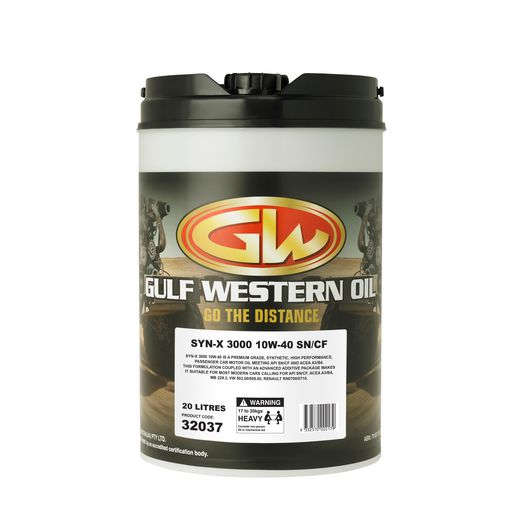
Gulf Western · Part number 32037 · NZ$448.00 incl. GST
If your engine's been drinking oil like it's going out of fashion, or that oil pressure light's doing a cheeky little dance on cold starts, it's probably time to suss out your oil grade. A slightly thicker brew, like this Gulf Western, can often sort both issues, and you'll be chuffed at the savings doing it yourself.
Price
NZ$448.00 including GST. Part number 32037.
Fits these vehicles
- Abarth Ritmo (1983–1987)
- Alfa Romeo 145 (1994–1996)
- Alfa Romeo 145 (1996–2001)
- Alfa Romeo 145 (1997–2000)
- Alfa Romeo 146 (1994–1996)
- Alfa Romeo 146 (1996–2001)
- Alfa Romeo 146 (1997–2000)
- Alfa Romeo 147 (2001–2010)
- Alfa Romeo 147 (2002–2010)
- Alfa Romeo 147 (2003–2010)
- Alfa Romeo 147 (2004–2010)
- Alfa Romeo 147 (2004–2010)
- Alfa Romeo 147 (2005–2010)
- Alfa Romeo 155 (1992–1995)
- Alfa Romeo 155 (1992–1995)
- Alfa Romeo 155 (1992–1995)
- Alfa Romeo 155 (1992–1997)
- Alfa Romeo 155 (1995–1997)
- Alfa Romeo 1750-2000 (1968–1972)
- Alfa Romeo 33 (1984–1987)
- Alfa Romeo 33 (1986–1989)
- Alfa Romeo 33 (1986–1989)
- Alfa Romeo 33 (1986–1989)
- Alfa Romeo 33 (1986–1989)
- Alfa Romeo 33 (1988–1989)
- Alfa Romeo 33 (1988–1989)
- Alfa Romeo 33 (1990–1992)
- Alfa Romeo 33 (1990–1992)
- Alfa Romeo 33 (1990–1992)
- Alfa Romeo 33 (1990–1992)
- Alfa Romeo 33 (1990–1994)
- Alfa Romeo 33 (1990–1994)
- Alfa Romeo 33 (1990–1994)
- Alfa Romeo 33 (1990–1994)
- Alfa Romeo 33 (1990–1994)
- Alfa Romeo 33 (1990–1994)
- Alfa Romeo 33 (1990–1994)
- Alfa Romeo 33 (1990–1994)
- Alfa Romeo 33 (1992–1994)
- Alfa Romeo 33 (1992–1994)
Description
Is Your Engine Getting Thirsty? Let's Talk Oil Grades and Pocketing Those Savings!
Alright, let's cut to the chase. If you're constantly topping up your engine oil, or that oil pressure light is flickering on and off like a faulty Christmas tree bulb when you first start up, it might be a sign to rethink the oil grade you're running. Switching to a slightly thicker blend, something like this trusty Gulf Western, can often be the no-brainer solution to both woes. And trust us, you'll be absolutely stoked with how much cash you keep in your wallet by tackling this yourself, instead of forking out for workshop rates.
Why Oil Grade Matters
Engine oil isn't just some slippery stuff; it's the absolute lifeblood of your engine. It's working tirelessly to cut down friction, keep things cool, whisk away grime, and fend off rust. As engines clock up the kilometres, or just get a bit older, they can develop tiny bits of wear, meaning the gaps between parts get a smidge bigger. That's precisely where your oil grade steps in.
The numbers splashed across an oil bottle (like 10W-40) tell you all about its viscosity – basically, how thick and flowy it is. The first number (with that 'W' for winter) clues you in on how easily the oil moves when it's cold, which is super important for those crisp morning starts. The second number? That's its thickness once the engine's all warmed up and humming along. For an older engine, sometimes a slightly higher viscosity oil is just the ticket to keep that pressure steady and stop it from guzzling oil.
Gulf Western: A Kiwi-Tough Choice
Gulf Western is a solid, well-respected brand, known for its quality and being a great fit for heaps of different vehicles. This particular oil comes loaded with good stuff:
• High Viscosity Index: Keeps its thickness stable across a huge range of temperatures.
• Enhanced Wear Protection: Guards those crucial engine bits and bobs.
• Excellent Thermal Stability: Doesn't break down under the pump, even when things get hot.
• Superior Sludge Control: Helps keep your engine sparkling clean for longer.
• Suitable for Petrol & Diesel Engines: Super versatile for all sorts of rigs.
Signs You Might Need to Change Your Oil Grade
Keep an eye out for these tell-tale signs:
• The low oil pressure warning light flickering, especially when you're idling.
• You're noticing your oil level dropping way faster between services.
• Engine making knocking or ticking noises? Sometimes a slightly thicker oil can quieten things down.
• Seeing little oil drips? A thicker oil might help seal up those tiny leaks.
• Engine feeling a bit sluggish or not as peppy as it used to be.
DIY Oil Change: Save Big, Stay Confident
Changing your own oil is a pretty straightforward job that can save you a decent chunk of change compared to what a workshop would charge. You're easily looking at $50-$100 in savings, even after grabbing the oil and a fresh filter. Plus, you get the satisfaction of knowing it's been done right, by you.
DIY Safety Note: Always use jack stands when working under a vehicle. Never rely on a jack alone. Dispose of used oil responsibly at a recycling centre.
WOF Angle: While your oil grade itself isn't directly on the WOF checklist, excessive oil leaks or low oil pressure will definitely see you fail. Keeping your oil level spot-on and using the right grade helps ensure your vehicle sails through its WOF like a champ.
Taking Charge of Your Engine's Health
Look, you don't need to be a fully-fledged mechanic to understand what your engine needs. Picking the right oil and paying attention to your vehicle's little quirks is such an easy way to keep it humming along smoothly. Make changing your own oil your default – because you're the kind of owner who gets stuck in and truly knows their vehicle. Bob's your uncle, and your engine's sorted!
---
🛠️ Bob's Pro Tip: Do the Job Right!
🧰 What Else You'll Need:
• Clean Workspace: Use a dedicated oil drip tray and have a roll of workshop towels ready to catch any spills during the drain.
• Filter Removal: Keep an oil filter wrench or strap wrench handy, as old filters can be stubbornly seized.
• Pre-Lubrication: Smear a tiny dab of fresh engine oil onto the rubber gasket of the new oil filter before spinning it on to ensure a perfect, leak-free seal.
• Clean Hands: Keep Nitrile Gloves and heavy-duty hand cleaner nearby to protect your skin from used motor oil.