Gulf Western Ultra Clear Synthetic Gear Oil 80W-90 - 4L
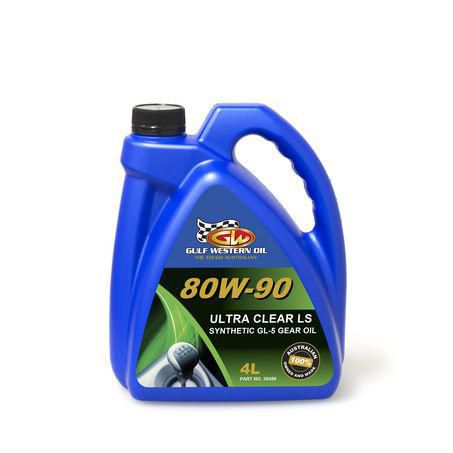
Gulf Western · Part number 30459 · NZ$178.00 incl. GST
If your gearbox is grumbling like a grumpy old bloke or the diff's singing a sad song, don't just chuck expensive additives at it! Often, a simple gear oil swap is all it takes to quiet things down and get you shifting smoothly again. It's a proper no-brainer fix that workshops often overlook.
Price
NZ$178.00 including GST. Part number 30459.
Fits these vehicles
- Alfa Romeo 145 (1994–1996)
- Alfa Romeo 145 (1994–1996)
- Alfa Romeo 145 (1996–2001)
- Alfa Romeo 145 (1997–2000)
- Alfa Romeo 146 (1994–1996)
- Alfa Romeo 146 (1994–1996)
- Alfa Romeo 146 (1996–2001)
- Alfa Romeo 146 (1997–2000)
- Alfa Romeo 1750-2000 (1968–1972)
- Alfa Romeo 1750-2000 (1971–1975)
- Alfa Romeo 33 (1983–1986)
- Alfa Romeo 33 (1983–1987)
- Alfa Romeo 33 (1983–1993)
- Alfa Romeo 33 (1984–1986)
- Alfa Romeo 33 (1984–1987)
- Alfa Romeo 33 (1984–1987)
- Alfa Romeo 33 (1984–1989)
- Alfa Romeo 33 (1986–1989)
- Alfa Romeo 33 (1986–1989)
- Alfa Romeo 33 (1986–1989)
- Alfa Romeo 33 (1986–1989)
- Alfa Romeo 33 (1986–1989)
- Alfa Romeo 33 (1986–1989)
- Alfa Romeo 33 (1986–1989)
- Alfa Romeo 33 (1988–1989)
- Alfa Romeo 33 (1988–1989)
- Alfa Romeo 33 (1990–1992)
- Alfa Romeo 33 (1990–1992)
- Alfa Romeo 33 (1990–1992)
- Alfa Romeo 33 (1990–1992)
- Alfa Romeo 33 (1990–1994)
- Alfa Romeo 33 (1990–1994)
- Alfa Romeo 33 (1990–1994)
- Alfa Romeo 33 (1990–1994)
- Alfa Romeo 33 (1990–1994)
- Alfa Romeo 33 (1990–1994)
- Alfa Romeo 33 (1990–1994)
- Alfa Romeo 33 (1990–1994)
- Alfa Romeo 33 (1992–1994)
- Alfa Romeo 33 (1992–1994)
Description
Gear Oil: The Unsung Hero of Your Driveline – Give Your Gears Some Love!
If your gearbox is feeling notchy, especially when the engine's cold, or you're hearing a whine from the diff that's got you worried – hold fire before you reach for those pricey additives! More often than not, simply draining out the old, tired gear oil and replacing it with fresh, correct-spec stuff works wonders. It's a surprisingly cheap and cheerful fix that many workshops tend to skip over, but it makes a world of difference.
Let's be honest, gear oil isn't exactly the first thing most of us think about until something starts to go wrong. But just like engine oil, it breaks down over time, losing its crucial viscosity and protective mojo. When that happens, you're looking at increased wear, noisy operation, and eventually, a component failure that'll have you gutted.
Why Bother Changing Your Gear Oil?
• Smoother Shifting: Fresh gear oil is like a spa day for your gearbox – making gear changes feel slicker and more precise.
• Reduced Noise: A well-lubricated differential runs quieter than a mouse. That whiny sound? Often just a cry for new oil.
• Extended Component Life: Clean, top-notch gear oil acts like a bodyguard for your gears and bearings, fending off wear and tear and extending their lifespan significantly.
• Prevents Overheating: Old, knackered oil doesn't dissipate heat effectively, which can lead to your precious components getting a bit too hot under the collar and potentially damaging them.
Choosing the Right Gear Oil: Don't Skimp on the Specs!
Getting the right gear oil is absolutely critical. Always check your vehicle's manual for the recommended specification (e.g., 75W-90, 80W-140, etc.) and API rating (e.g., GL-4, GL-5). Slapping in the wrong oil can do more harm than good to your gearbox or differential.
Gulf Western 30459 is a high-performance gear oil engineered to deliver excellent protection and top-tier performance across a range of applications, including gearboxes, differentials, and transfer cases. It's a champion at protecting against wear and corrosion, maintaining its viscosity even under the toughest conditions, and reducing friction for super-smooth operation.
When to Change Your Gear Oil: Keep an Eye on the K's!
A good rule of thumb is to swap out your gear oil every 50,000 - 100,000 km, or exactly as your vehicle's manual suggests. If you're regularly hauling heavy loads or tackling demanding conditions, you might need to give it a refresh more frequently.
DIY Change – Is it for you? Absolutely!
Changing gear oil is a relatively straightforward job for the keen home mechanic. You'll need a few basic tools – think a trusty wrench, a drain pan, and a fluid pump. There are heaps of online videos showing you the ropes. Just remember to be a good Kiwi and dispose of your old oil responsibly at your local recycling centre.
A workshop will charge you a pretty penny for this, with labour costs and parts mark-up. Doing it yourself, at home, will save you a heap of cash for that cafe lunch!
WOF Angle: What Your Warrant Inspector Looks For
While gear oil isn't directly scrutinised during a Warrant of Fitness (WOF) inspection, excessive noise or any tell-tale leaks from your gearbox or differential could definitely see you fail that WOF check. So, keep things shipshape!
---
🛠️ Bob's Pro Tip: Do the Job Right!
🧰 What Else You'll Need:
• Clean Workspace: Use a dedicated oil drip tray and have a roll of workshop towels ready to catch any spills during the drain.
• Filter Removal: Keep an oil filter wrench or strap wrench handy, as old filters can be stubbornly seized.
• Pre-Lubrication: Smear a tiny dab of fresh engine oil onto the rubber gasket of the new oil filter before spinning it on to ensure a perfect, leak-free seal.
• Clean Hands: Keep Nitrile Gloves and heavy-duty hand cleaner nearby to protect your skin from used motor oil.