Penrite Vantage Semi Synthetic 10W-30 Engine Oil 1L
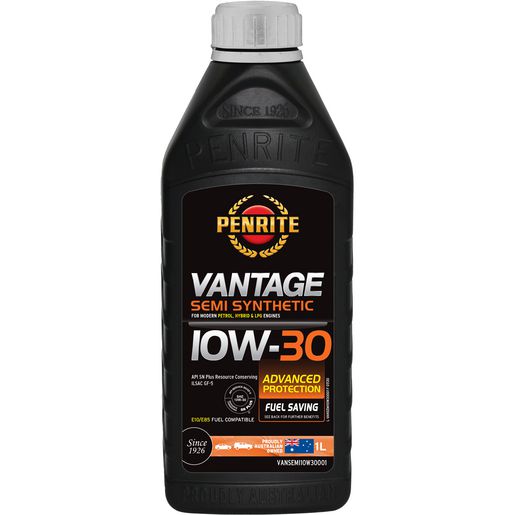
Penrite · Part number VANSEMI10W30001 · NZ$34.00 incl. GST
For your trusty daily driver or a zippy hybrid like the Toyota Corolla, Honda Jazz, or Lexus RC 300h, top-notch Engine Oil is the absolute guts of keeping those precision-engineered bits humming along, protecting 'em from wear, heat, and all the gunk our varied Kiwi roads throw at them.
Price
NZ$34.00 including GST. Part number VANSEMI10W30001.
Fits these vehicles
- Ford Falcon (2002–2005)
- Ford Falcon (2005–2010)
- Honda Accord (2003–2008)
- Honda Cr-V (2007–2012)
- Honda Cr-V (2007–2012)
- Hyundai I30 (2007–2011)
- Hyundai I30 (2008–2012)
- Hyundai I30 (2012+)
- Kia Picanto (2004–2011)
- Lexus IS (2005–2013)
- Mazda 3 (2003–2009)
- Mazda 6 (2002–2007)
- Mazda 6 (2005–2007)
- Mazda Eunos Roadster (2015+)
- Nissan Lafesta (2011+)
- Nissan Note (2012+)
- Nissan Skyline (2003–2006)
- Subaru Forester (2010+)
- Subaru Forester (2018+)
- Subaru Impreza (2007–2012)
- Subaru Impreza (2011+)
- Subaru Legacy (2003–2009)
- Subaru Legacy (2007–2009)
- Subaru Legacy (2009–2014)
- Subaru Outback (2003–2009)
- Subaru Outback (2003–2009)
- Subaru Outback (2009+)
- Subaru XV (2017+)
- Suzuki Cultus (2017+)
- Suzuki Escudo (2015+)
- Suzuki SX4 S-Cross (2013–2022)
- Toyota Allex (2001–2007)
- Toyota Altezza (1998–2005)
- Toyota Auris (2012–2018)
- Toyota Avensis (2003–2008)
- Toyota BB (2006–2016)
- Toyota Belta (2005–2012)
- Toyota Belta (2011–2017)
- Toyota Blade (2006–2012)
- Toyota Brevis (1999–2002)
Description
Engine Oil Swap: Keep Your Ride Happy, Kiwi Style — Featuring Penrite
> Engine oil isn't just black gold; it's the lifeblood that lubricates, cools, and scrubs your engine's insides clean, all while fending off that nasty metal-on-metal grind that spells disaster. Over time, this magical brew breaks down from the heat, gets mucky with combustion leftovers, and its protective additives just pack it in. This is especially true for the workhorse Japanese sedans, clever hybrids, and family SUVs like the Mazda 626, Hyundai Santa Fe, and Toyota C-HR Hybrid that keep Kiwis moving, whether it's the daily grind or a weekend escape.
Signs Your Engine's Thirsty
• Engine sounding a bit rougher than usual, maybe a wee tick or knock when you fire it up
• That pesky oil warning light flashing on your dash
• Dipstick showing dark, gritty oil instead of a nice, clear amber
• Suddenly using more juice, even though your driving habits haven't changed
• Blue smoke wafting from the exhaust — a sure sign of oil burning
• Oil level keeps dropping between services
• Feeling a bit sluggish on the acceleration or less responsive
Will it pass WOF?
While your oil's condition isn't a direct WOF tick-box, what happens *because* of bad oil certainly is! Too much exhaust smoke from burning oil will fail the emissions check. Oil leaks dripping onto hot bits can cause fires, and inspectors will flag that faster than you can say 'sausage roll'. More importantly, ignoring your oil can muck up your engine big time, leading to more emissions, rough running, and potentially leaving you stranded — none of which screams 'roadworthy'.
DIY or Workshop?
Difficulty: 3/10 | Time: 30-45 minutes | Tools: Socket set, drain pan, funnel, new oil filter, correct oil grade
Doing an oil change is pretty much the entry-level DIY task, a real no-brainer to get stuck into. Most cars in this fitment — think Corollas, Accents, and Jazz models — have their drain plugs and filters nice and accessible. Hybrids like the Toyota C-HR Hybrid and Lexus RC 300h follow the same process, but they really love synthetic oils that can handle all that stop-start thermal cycling. Always, always have a squiz at your owner's manual for the right viscosity and how much you'll need.
Bob's Top Tips
Bob and the CARFIX crew reckon it's way smarter to get ahead of oil degradation than to wait for trouble to brew. For the Japanese and Korean stunners in this range, knocking out an oil change every 10,000km or 6 months usually hits the sweet spot for most driving. Though, if you're rocking a hybrid or a turbocharged beast, a tighter schedule is a good shout. Whether you're nursing a high-mileage Mazda 626 or keeping a newer Lexus hybrid in top nick, matching the manufacturer's oil spec is way more important than sticking to just one brand.
Bob @ CARFIX is always keen for a yarn to help you figure out precisely what oil grade and how much you need for your daily runabout or your flash hybrid. Pop into Bob's Shop for a chat — we'll get you sorted!
Fitment Notes
• Hybrid vehicles (Jazz Hybrid, C-HR Hybrid, RC 300h) generally need 0W-20 synthetic for peak fuel economy and to protect during those frosty morning starts
• Older legends like the Mazda 626 TD and Toyota Altezza might be after 5W-30 or 10W-30 conventional or semi-synthetic
• That Hyundai Santa Fe V6 has a bigger thirst for oil (around 5.5L) — double-check before you buy
• Always cross-reference your specific model year, as specs can change like the weather
• Please, dispose of your used oil responsibly at your local recycling centre — never, ever down the drain!
---
🛠️ Bob's Pro Tip: Do the Job Right!
🧰 What Else You'll Need:
• Clean Workspace: Use a dedicated oil drip tray and have a roll of workshop towels ready to catch any spills during the drain.
• Filter Removal: Keep an oil filter wrench or strap wrench handy, as old filters can be stubbornly seized.
• Pre-Lubrication: Smear a tiny dab of fresh engine oil onto the rubber gasket of the new oil filter before spinning it on to ensure a perfect, leak-free seal.
• Clean Hands: Keep Nitrile Gloves and heavy-duty hand cleaner nearby to protect your skin from used motor oil.