Penrite HPR 10 Full Synthetic 10W-50 Engine Oil 1L
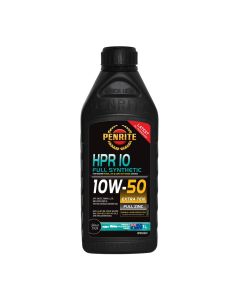
Penrite · Part number HPR10001 · NZ$34.00 incl. GST
That little tick-tick-tick from your engine on a chilly morning? It's not just a 'character feature' of an older car, mate; it's metal parts grinding because your oil's packed it in overnight. Swapping to HPR 10 is your ticket to silencing that top-end chatter and stretching out your service intervals without constantly topping up.
Price
NZ$34.00 including GST. Part number HPR10001.
Fits these vehicles
- BMW 3 (1991–1995)
- BMW 3 (1994–1995)
- BMW 3 (1994–2000)
- Citroen Xantia (1995–2003)
- Ford Courier (1999–2002)
- Ford Falcon (1998–2002)
- Ford Falcon (2005–2010)
- Ford Laser (1983–1985)
- Honda Accord (2000–2002)
- Honda Cr-V (1995–2001)
- Honda Integra (2002+)
- Hyundai I30 (2007–2011)
- Hyundai I30 (2008–2012)
- Mazda 3 (2003–2009)
- Mazda 323 (1998–2002)
- Mazda Eunos Roadster (2005–2014)
- Mazda Familia (1998–2003)
- Mazda Premacy (2010–2014)
- Mazda Roadster (1998–2000)
- Mitsubishi Aspire (1996–2007)
- Mitsubishi Delica (1994–2006)
- Mitsubishi Diamante (2003–2005)
- Nissan 200SX (1993–1998)
- Nissan Note (2012+)
- Nissan Patrol (1988–1995)
- Nissan Serena (1999–2005)
- Peugeot 306 (1993–2001)
- Peugeot 406 (2000–2004)
- Subaru Impreza (1994–2000)
- Subaru Impreza (2007–2012)
- Suzuki Cultus (2005+)
- Suzuki Wagon R+ (1995–1999)
- Toyota Corolla (1994–1999)
- Toyota Corolla (1997–2002)
- Toyota Corolla (1998–2001)
- Toyota Corona (1991–1996)
- Toyota Highlander (2007–2014)
- Toyota RAV4 (1994–2000)
- Toyota RAV4 (2003–2005)
- Toyota Starlet (1996–1999)
Description
Give Your Old Engine a New Lease on Life with Penrite HPR 10: Silence the Ticks, Skip the Top-Ups!
That faint, rhythmic ticking sound you hear on a cold morning start isn't just an old engine 'waking up'—it's metal-on-metal wear because your oil has thinned out too much to stay on the components overnight. Switching to HPR 10 is the simplest way to stop that top-end noise and bridge the gap between service intervals without reaching for a top-up bottle every second week.
The NZ Reality for Older Engines
Most workshops will tip in whatever bulk semi-synthetic 10W-40 they have on the reel because it's cheap and 'covers everything.' But as a Kiwi engine clocks over 150,000km, the internal clearances widen. That standard workshop oil becomes too thin when hot, slipping past piston rings and burning off, or failing to cushion the valve train.
Penrite HPR 10 is a full synthetic 10W-50. It’s engineered with 'Extra Ten' technology, meaning it starts like a 10-weight oil to protect you during a frosty Waikato morning, but acts like a 50-weight oil once you hit operating temperature on the SH1. It fills those microscopic gaps that thinner oils can't, restoring compression and silencing the 'tappity' sounds that signal premature wear.
Why HPR 10 is the Practical Choice
• High Zinc Content: This is the 'glue' that protects flat-tappet cams and high-load engine parts from grinding together.
• Full Synthetic Base: Unlike mineral-based 'high mileage' oils, this won't break down or turn to sludge when you're towing or climbing a heavy range.
• Consumption Control: If you’re tired of the 'Check Oil' light appearing six weeks after a service, the 50-weight heat protection is designed to stop the oil from evaporating through the PCV system or burning in the combustion chamber.
Warrant of Fitness (WOF) and Maintenance
While engine oil isn't a direct WOF fail, an engine that burns oil often results in exhaust smoke—which is an immediate fail. More importantly, a well-maintained engine means no oil leaks on your driveway or the inspector's floor.
Note for the DIYer: If you’re doing your own oil change, always ensure your vehicle is on level ground. If you’re getting under the car to drop the sump plug, never rely on a trolley jack alone—always use rated jack stands. Safety isn't about being scared; it's about being professional.
An older engine isn't a 'beater' until you start treating it like one. Choosing a premium, high-viscosity synthetic is the difference between an engine that feels tired and one that feels tight and responsive.
Bob's Style Polish AI Says:
Got questions about the right oil for your ride? Give Bob a shout – he's always keen for a yarn and can sort you out with the best advice!
---
🛠️ Bob's Pro Tip: Do the Job Right!
🧰 What Else You'll Need:
• Clean Workspace: Use a dedicated oil drip tray and have a roll of workshop towels ready to catch any spills during the drain.
• Filter Removal: Keep an oil filter wrench or strap wrench handy, as old filters can be stubbornly seized.
• Pre-Lubrication: Smear a tiny dab of fresh engine oil onto the rubber gasket of the new oil filter before spinning it on to ensure a perfect, leak-free seal.
• Clean Hands: Keep Nitrile Gloves and heavy-duty hand cleaner nearby to protect your skin from used motor oil.