TRW Brake Pads Set (DB1387)
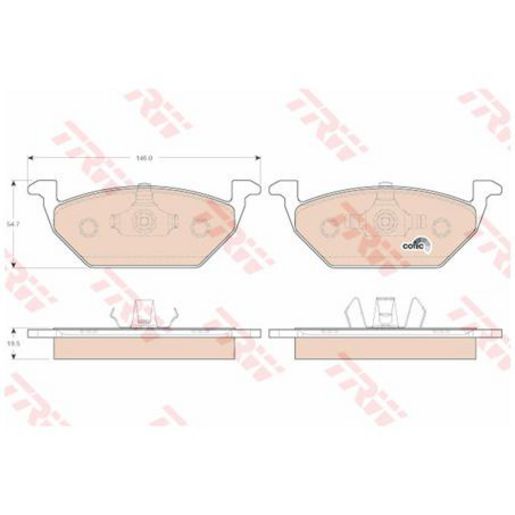
TRW · Part number GDB1984 · NZ$168.00 incl. GST
Is your WOF inspector giving you the side-eye about your front brakes? You're not the only one. Grabbing your own bits and bobs could save you a stack of cash and keep your trusty steed safe on our Kiwi roads. Let's get stuck in!
Price
NZ$168.00 including GST. Part number GDB1984.
Fits these vehicles
- Audi A1 (2010–2015)
- Audi A1 (2010–2015)
- Audi A1 (2011–2015)
- Audi A1 (2011–2015)
- Audi A1 (2012–2015)
- Audi A1 (2015–2018)
- Audi A1 (2015–2018)
- Audi A1 (2018+)
- Audi A1 (2018+)
- Audi A1 (2018+)
- Audi A1 (2019–2022)
- Audi A1 (2019–2022)
- Audi A1 (2020+)
- Audi A1 (2021+)
- Audi A3 (1996–2001)
- Audi A3 (1996–2003)
- Audi A3 (1996–2003)
- Audi A3 (1997–2001)
- SEAT Arona (2017+)
- SEAT Arona (2017+)
- SEAT Cordoba (2002–2005)
- SEAT Cordoba (2002–2006)
- SEAT Cordoba (2002–2007)
- SEAT Cordoba (2002–2009)
- SEAT Cordoba (2002–2009)
- SEAT Cordoba (2002–2009)
- SEAT Cordoba (2002–2009)
- SEAT Cordoba (2002–2009)
- SEAT Cordoba (2003–2009)
- SEAT Cordoba (2005–2009)
- SEAT Cordoba (2005–2009)
- SEAT Cordoba (2006–2009)
- SEAT Cordoba (2006–2009)
- SEAT Cordoba (2006–2009)
- SEAT Ibiza (2002–2005)
- SEAT Ibiza (2002–2005)
- SEAT Ibiza (2002–2006)
- SEAT Ibiza (2002–2009)
- SEAT Ibiza (2002–2009)
- SEAT Ibiza (2002–2009)
Description
Front Brake Pads: Are They Chattering Away Behind Your Wheels?
So, the WOF chap just dropped the bomb: front pads and rotors are a goner? Happens to the best of us, mate. But here's a hot tip: getting a second opinion (and wrangling the parts yourself) can save you a pretty penny and keep your ride humming safely. Let's dive into what to keep an ear out for.
The Obvious Signs
• Squealing: That high-pitched shriek? That's usually your pads screaming for attention, a built-in warning that they're getting thin. It's designed to annoy you into action. Ignore it for too long, and you'll soon hear...
• Grinding: Uh oh, that's metal-on-metal. This means you've worn right through the pad material, and now your brake rotor is copping it. That's a gutting sound and usually means a bigger repair bill.
• Warning Light: Many modern cars have a fancy little brake pad wear sensor. If that light pops up, get it checked pronto. Don't wait for your WOF to tell you. And if you're keen to swap the pads yourself, those sensors are usually a piece of cake to replace too. No need to pay a mechanic's hourly rate for a 20-minute job.
The Less Obvious Signs
• Reduced Braking Performance: Notice you're pushing the pedal harder than usual? Or it feels like your car takes a bit longer to pull up? This could point to worn pads, but it might also be glazed pads, some contamination, or even air in your brake lines. Time to play detective.
• Soft or Spongy Pedal: Often, this means air's gotten into your brake lines and needs a good bleed. But worn pads *can* play a part, as the caliper needs more fluid to push those well-used pads against the rotor.
Your WOF and Those Brakes
Your Warrant of Fitness (WOF) inspection gives your braking system a good going-over. Worn brake pads are a classic reason for a WOF fail. The inspector will be checking pad thickness and overall condition with a keen eye. Don't risk that re-inspection fee – sort those brake issues out sharpish.
DIY Replacement: Up Your Alley?
Swapping out brake pads is a pretty straightforward gig for the home mechanic *if* you're comfortable getting hands-on with critical safety bits. You'll generally need basic tools, a jack, some sturdy jack stands, and a bit of know-how.
Safety First: *Always* use jack stands when you're under the car. Never, ever rely solely on a jack.
The TRW Difference
These TRW GDB1984 brake pads are top-notch OE quality, engineered to keep the noise down and brake dust to a minimum. They come shimmed, beveled, and slotted, crafted with a positive molding process for consistent, reliable performance. That means a safer, quieter, and more dependable braking experience every time you hit the pedal.
Stop Paying Workshop Markups
Workshops typically slap a 50-100% markup on parts. Buying these pads yourself and either fitting them or taking them to a trusted local mechanic *could* save you hundreds. You're the kind of legend who gets that sorted.
Got questions? Need a hand finding the right gear? Just flick Bob a message – he's always keen for a chat and happy to help you get your project over the line!
---
🛠️ Bob's Pro Tip: Do the Job Right!
> If you're swapping out these parts on your vehicle, don't skimp on fresh rotors. Check out our compatible TRW Disc Brake Rotors (SKU DF4027S) to ensure a perfect bed-in and get the job done properly first time!
🧰 What Else You'll Need:
• Safety First: Never work under a vehicle supported only by a jack. Always secure it on heavy-duty safety jack stands.
• Brake Dust Protection: Brakes get incredibly dirty. Keep a pack of Nitrile Gloves handy to protect your hands from stubborn brake dust.
• Clean and Prep: Use a high-quality Brake Cleaner spray to blast away stubborn dust, oil, and road grime from the caliper assembly and new rotors before reassembly.
• Lubrication: Apply a thin smear of high-temperature caliper grease to the pad backing plates and slide pins (keep it off the pad friction material!) to prevent squeals and ensure smooth caliper operation.