Penrite 10 Tenths Premium 0 0W-40 20L
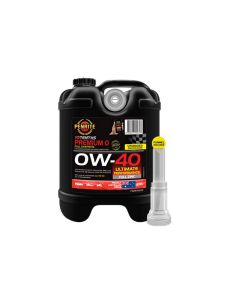
Penrite · Part number FS0W40020 · NZ$586.00 incl. GST
For your high-performance beauty or European marvel, whether it's a Subaru WRX, Audi A4/A5, BMW 1 Series, or even a Porsche 911, premium engine oil isn't just a luxury – it's the lifeblood that keeps those precision-engineered guts humming, protecting them from the gnarly wear, heat, and crud buildup that comes with a bit of spirited driving. This Penrite option is a top-notch choice we've got on the shelves.
Price
NZ$586.00 including GST. Part number FS0W40020.
Fits these vehicles
- Honda Accord (2003–2008)
- Honda Accord (2003–2008)
- Maserati Ghibli (2013+)
- Mercedes-Benz A-Class (2015–2018)
- Mercedes-Benz Clk (2005–2009)
- Peugeot 406 (2000–2004)
- Subaru Impreza (1994–2000)
Description
Keep Your Pride and Joy Purring: The Ultimate Engine Oil Swap Guide — Featuring Penrite
> Alright, let's get down to brass tacks. Your engine oil is the unsung hero of your ride, doing triple duty: lubricating, cooling, and scrubbing those vital internal bits clean. Without it, you're looking at metal-on-metal mayhem and a whole lot of heartache. Especially for those grunty performance machines like a WRX, a turbocharged Audi, or the precision German engineering in a BMW or Mercedes-Benz, that oil takes a hammering. High RPMs, boost pressure, and our wild Kiwi weather conditions mean that oil degrades faster than a hot pie at a rugby game. Keep it fresh, or pay the piper later!
Is Your Engine Whispering for Help? Here's What to Look For:
• Dash light flashing? That oil pressure warning isn't just for show.
• Engine sounding a bit rough, like it's clearing its throat, especially when you first fire it up?
• Dipstick showing black, gritty sludge instead of that lovely golden amber?
• Suddenly burning more juice at the pump, even though your driving hasn't changed?
• Turbo feeling sluggish, or your throttle response just isn't what it used to be?
• Catching a whiff of burning oil from under the bonnet after a good run?
Will it pass WOF?
While your oil's condition isn't a direct tick-box for a WOF, don't get complacent. Dripping oil all over the road, causing environmental grief, or that tell-tale plume of smoke from burning oil will definitely see you fail. But honestly, that's the least of your worries; neglected oil is a one-way ticket to engine obliteration — a far bigger headache and drain on the wallet than any WOF retest.
DIY or Workshop?
Difficulty: 3/10 | Time: 30-45 minutes | Tools: Socket set, drain pan, funnel, new oil filter
For most of these vehicles, it's a pretty straightforward job. Now, some of your European mates, like a BMW 1 Series or a Mercedes E-Class, might have a few extra quirks — think special sump plug tools or underbody panels that need to come off. And for our WRX crew, just make sure you've got enough clearance to get under there safely. Always warm up the engine a bit first; it helps all that old oil drain out properly.
Bob's Expert Recommendation (and a friendly nudge!)
Bob and the CARFIX crew can't stress this enough: stick to your manufacturer's oil change intervals like glue. For modern synthetics, that's usually around 10,000-15,000km. BUT, and this is a big BUT, if you're giving it the beans in a turbocharged performance car, you should be halving that. Porsche 911 owners, you need those specific Porsche-approved specs. And for our WRX enthusiasts, look for those high-zinc formulations — they're gold for protecting those flat-four engines.
Bob @ CARFIX is always on hand to help you work out exactly what oil grade and specification your performance or European vehicle demands. Make sure you head over to Bob's Shop for a chat!
Fitment Notes (The Nitty-Gritty)
• Double-check that viscosity grade matches your manufacturer's spec (0W-40, 5W-30, 5W-40 are common across this range).
• Turbocharged beasts (like a WRX, A4 TFSI, A5 FSI) need oils that meet specific OEM approvals — don't skimp here!
• European vehicles often demand very specific specs: VW 502.00/505.00, BMW LL-01, or MB 229.5 are typical.
• Oil capacity can swing wildly: a WRX might take around 4.5L, but a Porsche 911 could be closer to 8.5L. Confirm before you buy!
• Some Mercedes and BMW models use unique filters that require specific part numbers.
Frequently Asked Questions (and Bob's Straight Answers)
Q: How often should I change the engine oil in my turbocharged rocket like a Subaru WRX or Audi A4 TFSI?
A: For those turbocharged beauties, especially with our varied NZ conditions, you're looking at an oil change every 5,000-7,500km or every 6 months. That boost pressure and extra heat really make the oil work harder and break down faster than in a naturally aspirated engine.
Q: Can I just use the same engine oil in my BMW 1 Series as I would in my old Honda Civic?
A: Nah, mate, not a chance! Your BMW needs oils that meet its specific BMW Longlife-01 specifications, which include special additive packages. An older Honda Civic might be happy with a conventional 10W-30. Always match the manufacturer's specs – don't just go by the viscosity.
Q: Why do European cars seem to demand more expensive engine oil than, say, a Japanese car?
A: European manufacturers engineer their engines with much tighter tolerances and often design them for longer service intervals. This means they need fully synthetic oils with very specific approval certifications (like VW 502.00 or MB 229.5). These fancy formulations cost a bit more, but they're crucial for protecting those precision components.
Q: What's the worst that could happen if I chuck the wrong viscosity oil into my Porsche 911?
A: Using the wrong viscosity in a Porsche 911 is a recipe for disaster. You'll get inadequate lubrication when the engine's hot, which means accelerated wear on those precious flat-six internals. You could also end up with increased oil consumption, potential damage to your catalytic converter, and worst of all, you'll likely void your warranty. Not worth the risk!
Q: Is synthetic oil really worth the extra cash for an older car, like a 1995-2001 Honda Civic?
A: Absolutely, synthetic oil can be a game-changer for older engines. It does a fantastic job of reducing sludge buildup and offers much better protection during those chilly NZ winter cold starts. While a conventional oil that meets the manufacturer's specs is still okay if you're on a tight budget, synthetic definitely gives you an edge.
---
🛠️ Bob's Pro Tip: Do the Job Right!
🧰 What Else You'll Need:
• Clean Workspace: Use a dedicated oil drip tray and have a roll of workshop towels ready to catch any spills during the drain.
• Filter Removal: Keep an oil filter wrench or strap wrench handy, as old filters can be stubbornly seized.
• Pre-Lubrication: Smear a tiny dab of fresh engine oil onto the rubber gasket of the new oil filter before spinning it on to ensure a perfect, leak-free seal.
• Clean Hands: Keep Nitrile Gloves and heavy-duty hand cleaner nearby to protect your skin from used motor oil.